What Is Lighting Automation in Mumbai? Complete Guide
Ajeet Yadav October 16, 2026 11 min read
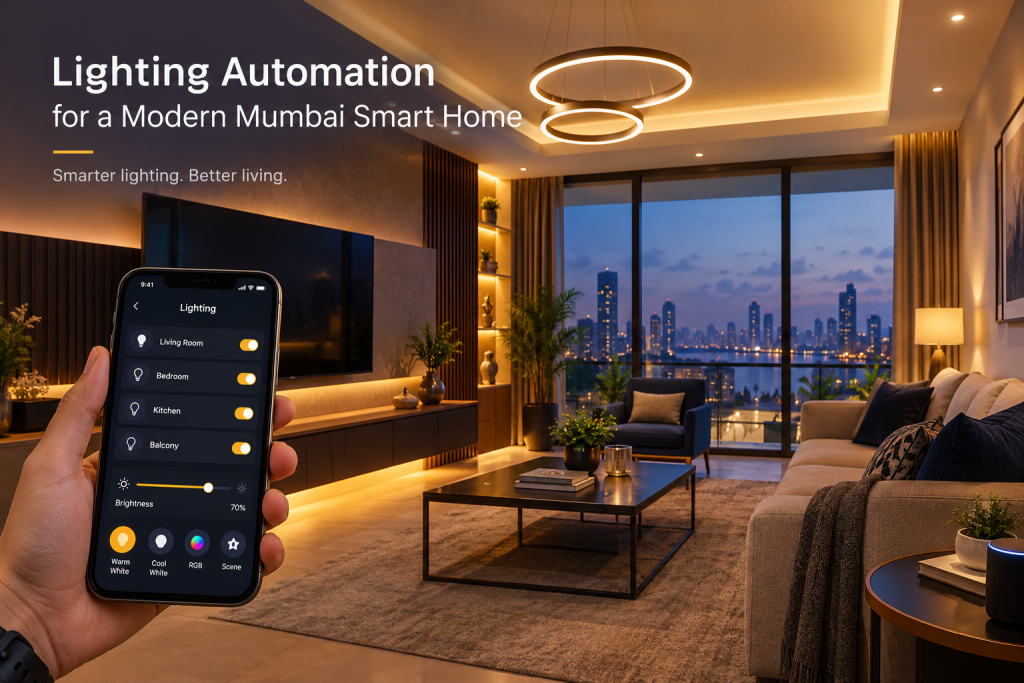
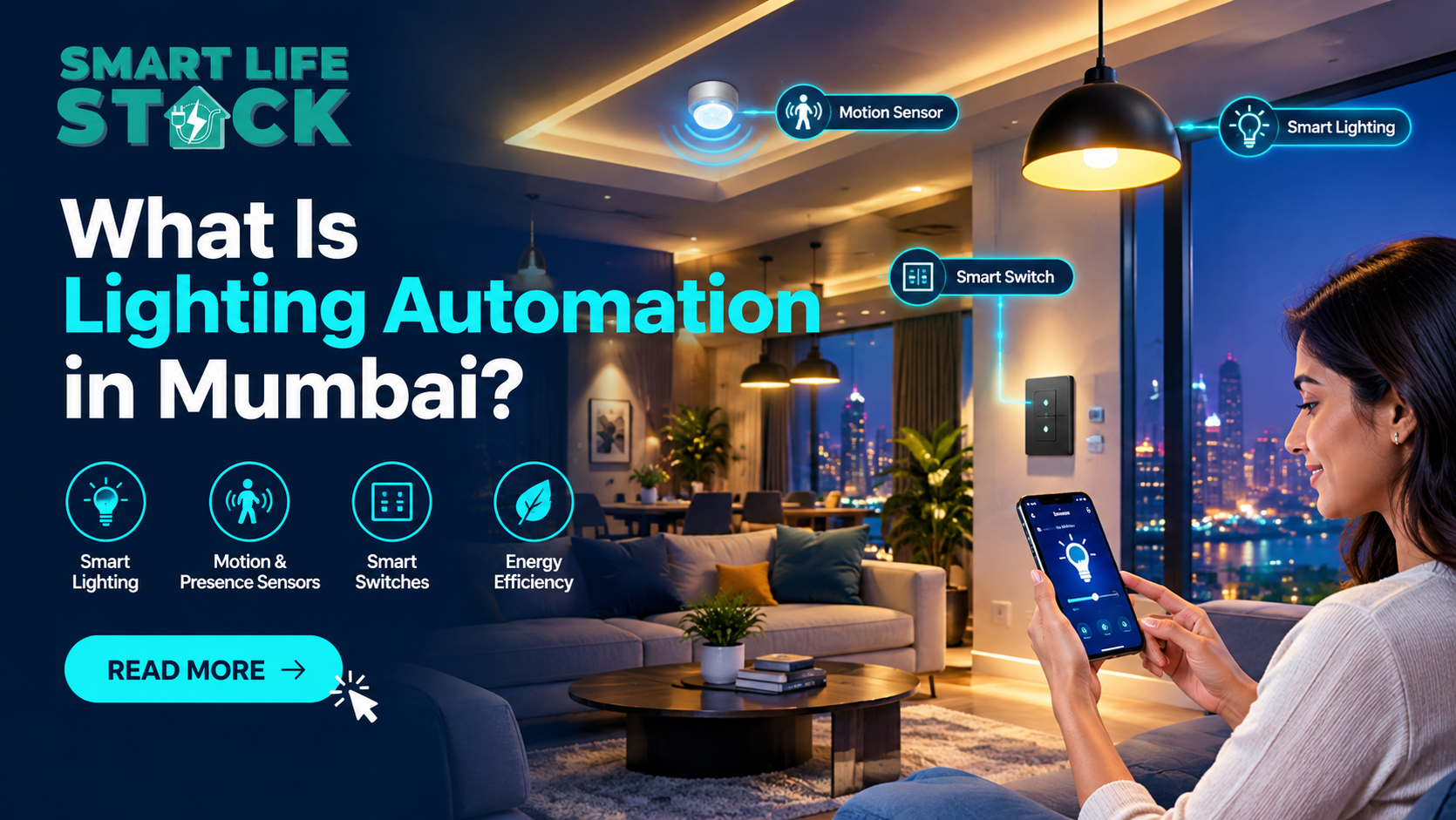
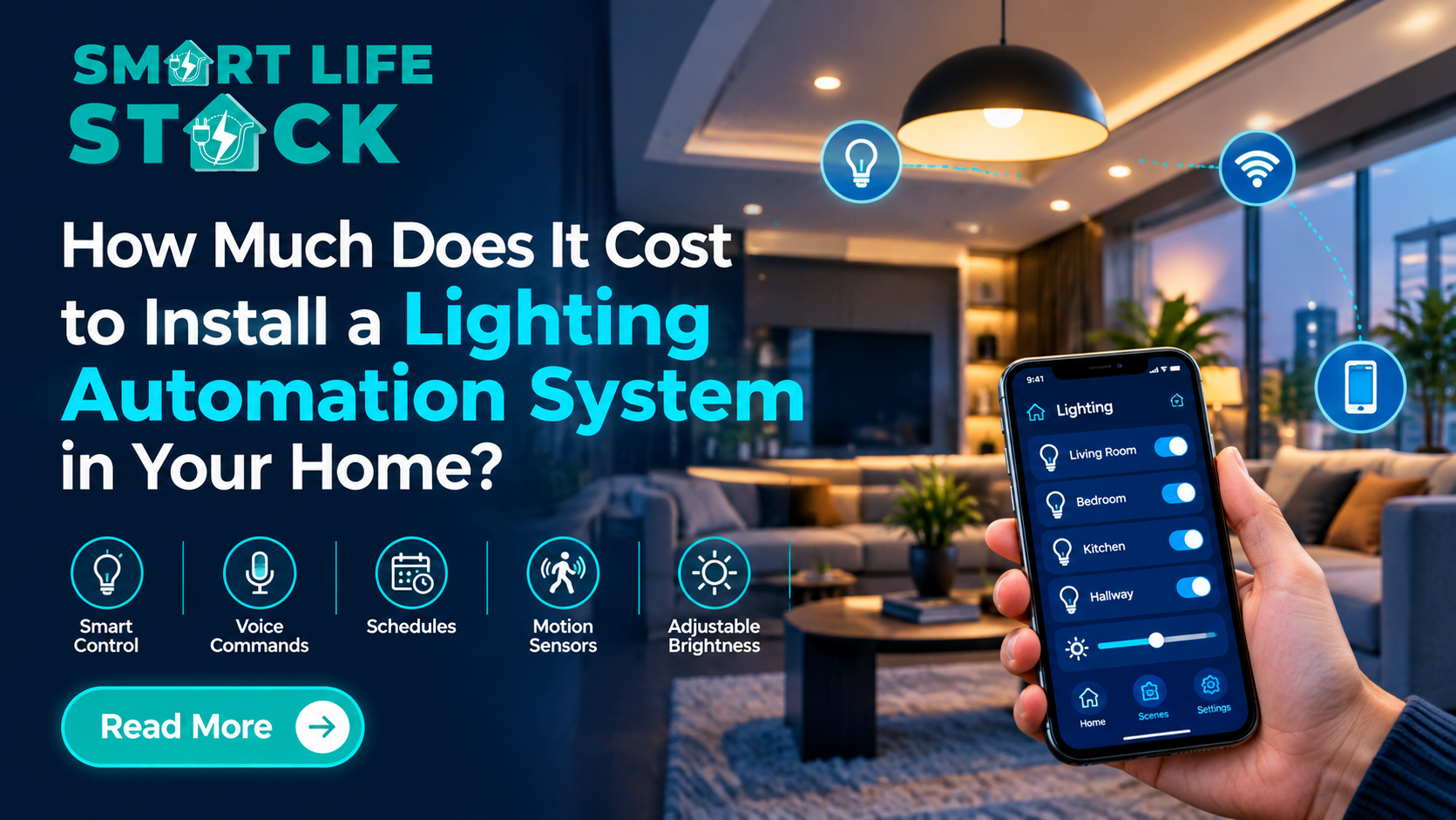
Lighting automation is a smart way to control lights automatically using smart switches, sensors, schedules, mobile apps, voice assistants, and predefined scenes. In Mumbai homes, apartments, offices, hotels, and rental properties, it can make everyday lighting more convenient while giving users greater control over how and when lights operate.
Unlike traditional lighting, where every light must be switched on or off manually, a lighting automation system can respond to time, occupancy, motion, user commands, or programmed routines.
For example, you could set your bedroom lights to turn on softly in the morning, switch off automatically when you leave, or activate selected lights when you say a voice command. The exact capabilities depend on the devices, wiring, control platform, and automation design.
This guide explainshow lighting automation works, what devices are involved, its benefits, installation considerations, and how Mumbai homeowners and businesses can choose an appropriate smart lighting setup.
What Is Lighting Automation?
Lighting automation is the use of connected electrical devices and control systems to operate lights automatically or remotely.
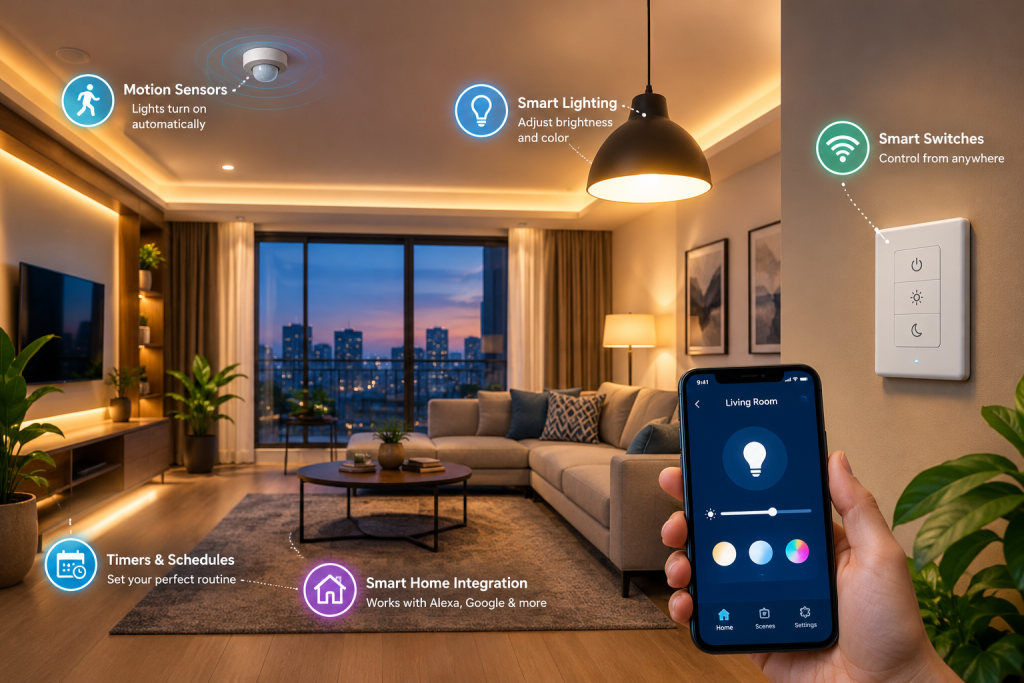
A typical setup may include smart switches or dimmers, lighting fixtures, motion or occupancy sensors, a central hub or compatible platform, and a mobile or voice-control interface.
Instead of controlling every light individually, users can create scenes and routines based on their lifestyle.
Common examples include:
Turning entrance lights on at a scheduled time
Switching off lights when a room becomes unoccupied
Dimming bedroom lights before sleeping
Creating a movie or entertainment lighting scene
Controlling lights remotely through a smartphone
Using voice commands through compatible assistants
Automating lights according to a daily schedule
Combining lighting with curtains, AC controls, or security devices
Modern ecosystems can also use standards such as Matter to improve interoperability between compatible smart-home products. The Connectivity Standards Alliance lists lighting and electrical devices among Matter-supported categories.
How Does a Lighting Automation System Work?
A smart lighting setup generally works through three main components: input, control, and output.
1. Input
The system receives information from a user or sensor.
Inputs can include:
Motion sensors
Occupancy sensors
Mobile applications
Voice commands
Time schedules
Door or window sensors
Other smart-home devices
For instance, a motion sensor can detect activity in a hallway and trigger a connected light.
2. Control
A smart controller, hub, switch, or compatible platform processes the input and applies the programmed automation rule.
Depending on the system, communication may use Wi-Fi, Bluetooth, Thread, Zigbee, or other supported technologies. Matter itself is an interoperability protocol that can operate over technologies including Wi-Fi, Thread, Ethernet, and Bluetooth for setup and connectivity.
3. Output
The connected light, switch, dimmer, or lighting controller performs the requested action.
For example:
Motion detected → controller receives signal → hallway light turns on
Or:
10:30 PM → the planned routine begins → a few bedroom lights fade
This simple input-control-output model is the foundation of many automated home systems
What Devices Are Used for Home Lighting Automation?
The right hardware depends on whether you are automating a single room, an apartment, an entire house, or a commercial property.
Smart Switches and Dimmers
Smart switches can replace or work alongside conventional switches, depending on the installation design. Dimmers provide additional control over brightness when the lighting hardware supports dimming.
They are particularly useful for:
Living rooms
Bedrooms
Dining areas
Home theaters
Offices
Smart Bulbs
Smart bulbs can provide app-based control, scheduling, brightness adjustment, and, depending on the model, color or color-temperature control.
They can be useful where users want a simpler retrofit without changing every electrical switch.
Motion and Occupancy Sensors
Lighting can be activated by sensors in response to occupancy or movement.
They are useful in areas such as:
Corridors
Bathrooms
Staircases
Utility rooms
Walk-in wardrobes
Offices
A motion sensor should be positioned according to the room layout and expected movement pattern. Poor placement can cause unnecessary triggering or missed detections.
Smart Hubs and Controllers
Some systems use a dedicated controller or hub to coordinate different devices.
A hub-based approach can be useful for larger whole-home automation systems where multiple devices and routines need to work together.
Voice Assistants
Compatible lighting can also be controlled using voice assistants. Google Home, for example, supports commands for turning lights on or off, changing brightness, and controlling lights by room.
Alexa-compatible devices can similarly be connected through the Alexa app, provided the devices meet compatibility requirements.
What Are the Benefits of Lighting Automation in Mumbai?
Lighting automation can offer practical advantages for both residential and commercial properties.
1. Convenience
You do not always need to walk to a wall switch.
Lights can be controlled through a phone, voice command, schedule, sensor, or automation scene, depending on the system.
2. Better Control
Smart lighting gives users more control over individual rooms and lighting zones.
For example, you can create separate lighting settings for the living room, bedroom, kitchen, balcony, and entrance.
3. Custom Lighting Scenes
A single command can activate multiple lighting actions.
A Movie Night scene could dim the main lights while keeping selected accent lights on. A Good Night scene could switch off most lights and leave a low-level hallway light active.
4. Occupancy-Based Lighting
In places where individuals commonly forget to turn off the lights, motion or occupancy sensors can automate the lighting.
This can be particularly useful for corridors, bathrooms, offices, and other intermittently occupied spaces.
5. Remote Access
Depending on the system and internet connectivity, users may be able to monitor or control connected lighting remotely.
This can be useful for homeowners who travel frequently or property owners who want to manage a Mumbai property while staying elsewhere.
The result can be a more coordinated smart home automation system rather than a collection of unrelated devices.
How to Control Smart Lights?
There are several common ways to control smart lighting.
Control Method
Best Use
Wall switch
Everyday manual control
Smartphone app
Remote and detailed control
Voice assistant
Hands-free operation
Motion sensor
Automatic room or corridor lighting
Schedule
Time-based routines
Smart scenes
Multiple devices controlled together
Central controller
Whole-home automation
Google Home’s app and voice commands can be used to control compatible lighting and other smart devices.
The important point is that users do not necessarily have to choose only one control method. A well-designed system can combine manual switches, apps, sensors, and voice control.
Lighting Automation for New Mumbai Flats
If you are buying or renovating a new flat, planning automation before electrical work is usually easier than adding everything after the installation is complete.
Before selecting devices, consider:
Which rooms should be automated?
Do you need dimming?
Do you want motion sensors?
Which lights should work together?
Do you need app or remote access?
Do you want Google Home, Alexa, or another platform?
Will curtains and AC also be automated?
Does the electrical design support the selected hardware?
For new construction, the automation plan can be discussed alongside electrical and interior design requirements. This can reduce the need for unnecessary modifications later.
Lighting Automation for Existing Homes
You do not always need to rebuild an existing home to introduce smart lighting.
Depending on the existing wiring and selected hardware, homeowners may use:
Smart bulbs
Smart plugs for suitable loads
Smart switches
Smart dimmers
Wireless sensors
Smart controllers
However, compatibility should be checked before installation.
Electrical wiring, neutral-wire requirements, load compatibility, switch-box depth, fixture type, and network coverage can affect which solution is appropriate.
For electrical work, use a qualified professional and select products appropriate for the intended installation. In India, BIS provides standards and certification information covering various electrical products and safety requirements.
What Should You Consider Before Choosing a Lighting Automation System?
The cheapest home automation kit is not automatically the best option. A suitable system should match the property, electrical setup, users, and future plans.
Compatibility
Check whether switches, bulbs, sensors, controllers, and voice platforms can work together.
If you plan to mix brands, interoperability becomes especially important. Matter is designed to improve compatibility between supported smart-home devices and ecosystems.
Reliability
Lighting is something you use every day. A system should be responsive and dependable rather than requiring frequent troubleshooting.
Ease of Use
The cheapest home automation kit is not automatically the best option. A suitable system should match the property, electrical setup, users, and future plans.
Scalability
Consider whether you may later add AC automation, curtain automation, security sensors, or other smart devices.
A scalable home automation system can make future expansion easier.
Installation and Support
Professional home automation installation can be valuable for larger projects because the installer can evaluate wiring, device compatibility, network coverage, control logic, and scene programming.
Lighting Automation for Offices, Hotels, and Rental Properties
Lighting automation is not limited to residential smart homes.
Offices
Office automation can combine lighting with motion or occupancy sensors. Lights can respond to room usage rather than remaining active throughout the day.
Hotels
Hotels can use automated lighting scenes to improve guest convenience while coordinating room lighting with other systems.
Rental Properties and Airbnb
Property owners can use smart lighting to make spaces easier to manage and create a more modern guest experience.
However, access permissions, device ownership, reset procedures, and internet dependency should be considered when the property changes occupants.
Is Lighting Automation Worth It?
Lighting automation can be worthwhile when convenience, control, flexibility, or integration are important priorities.
It may be particularly useful for:
New flat buyers
Homeowners renovating their property
Elderly residents who benefit from easier controls
Rental property owners
Airbnb hosts
NRIs managing Mumbai properties remotely
Interior designers
Real estate developers
Offices and commercial properties
Hotels
However, not every room needs the same level of automation.
A practical approach is to automate the areas where smart control provides a clear benefit instead of installing complex hardware everywhere simply because it is available.
Key Takeaways
Lighting automation allows lights to be controlled through switches, apps, sensors, schedules, scenes, and voice commands.
Smart lighting can be integrated into both new and existing homes.
Motion sensors are useful for corridors, bathrooms, offices, and other intermittently occupied areas.
Matter can improve interoperability between compatible smart-home products and platforms.
A good system should consider compatibility, reliability, installation, usability, and future expansion.
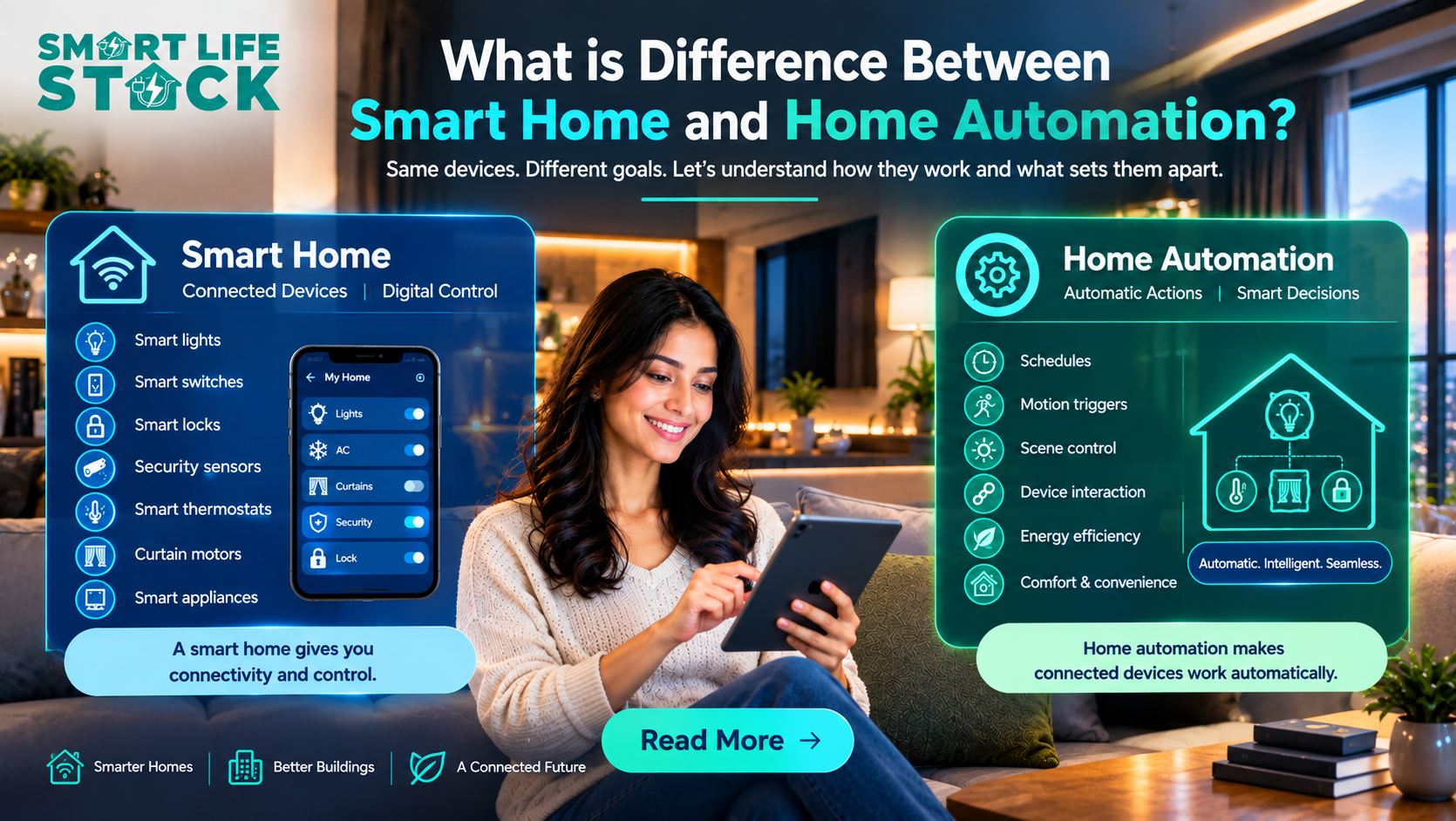
Lighting can also be integrated with AC, curtains, security, and other home automation solutions.
Professional planning can be particularly useful for larger whole-home or commercial installations.
Conclusion
Lighting automation is more than simply turning a bulb on and off from a smartphone. A properly planned system can connect switches, sensors, lights, voice assistants, schedules, and scenes into a practical smart-home experience.
For Mumbai homeowners, new flat buyers, rental property owners, NRIs, offices, hotels, and developers, the right approach is to focus on usability and long-term compatibility rather than choosing devices based only on features or price.
When designing a smart home automation system, take into account the electrical infrastructure of the property, the rooms you wish to automate, your preferred control type, and whether you may add AC, curtains, security, or other automation later.
For homeowners and businesses exploring these options, Smartlifestack can be positioned as a solution-focused brand for planning and implementing smart home automation and related automation solutions.
Frequently Asked Questions
1. What is lighting automation?
Lighting automation is a system that allows lights to operate automatically or remotely using smart switches, sensors, schedules, mobile applications, voice commands, or predefined scenes.
2. How does lighting automation work in a smart home?
A smart home lighting system receives an input such as motion, a voice command, a scheduled time, or an app instruction. A controller then sends the appropriate command to the connected light, switch, or dimmer.
3. Can lighting automation be installed in an existing Mumbai flat?
Sure. Smart bulbs, switches, dimmers, sensors, or wireless devices can be added to an existing home, depending on the wiring, switch boxes, fixtures, and chosen items.
4. Can I control automated lights with Alexa or Google Home?
Yes, compatible smart lights and switches can be connected to supported voice platforms. Compatibility should be checked before purchasing the devices. Google Home supports compatible smart lighting control through its app and voice commands, while Alexa supports compatible smart-home devices through its ecosystem.
5. Do I need a hub for home lighting automation?
Not always. Some smart lighting products can connect directly through Wi-Fi or Bluetooth, while other systems use hubs or controllers. The requirement depends on the product ecosystem and the type of automation you want.
6. Is lighting automation useful for elderly residents?
It can be. Voice control, remote control, scheduled lighting, and motion-based automation can reduce the need to operate switches manually. The system should still provide simple backup controls where appropriate.
7. Can lighting automation work with curtain and AC automation?
Yes, if the selected systems are compatible or connected through an appropriate automation controller. This allows scenes such as “Good Morning,” “Away,” or “Movie Night” to coordinate multiple devices.
8. Should I install lighting automation throughout the entire home?
Not necessarily. Start with rooms and situations where automation provides a clear benefit. You can then expand the system as your requirements grow.