If you are building a smart home in 2026, lighting is one of the best places to start. A good home automation system can do far more than turn lights on and off: it can automate scenes, respond to motion, adjust lighting based on time of day, provide voice control, and continue working locally even when the internet is unavailable.
But which system is actually best?
For most new installations in 2026, a locally capable system built around Matter/Thread or Zigbee, with Home Assistant as the automation layer, offers the best combination of flexibility, reliability, privacy, and future compatibility. For homeowners who prioritize simplicity and voice control, an Alexa-based smart home remains an excellent alternative.
The right choice, however, depends on your home, budget, technical comfort, and whether you are automating a few rooms or planning whole home automation systems.
What Is a Smart Home and How Does Lighting Automation Work?
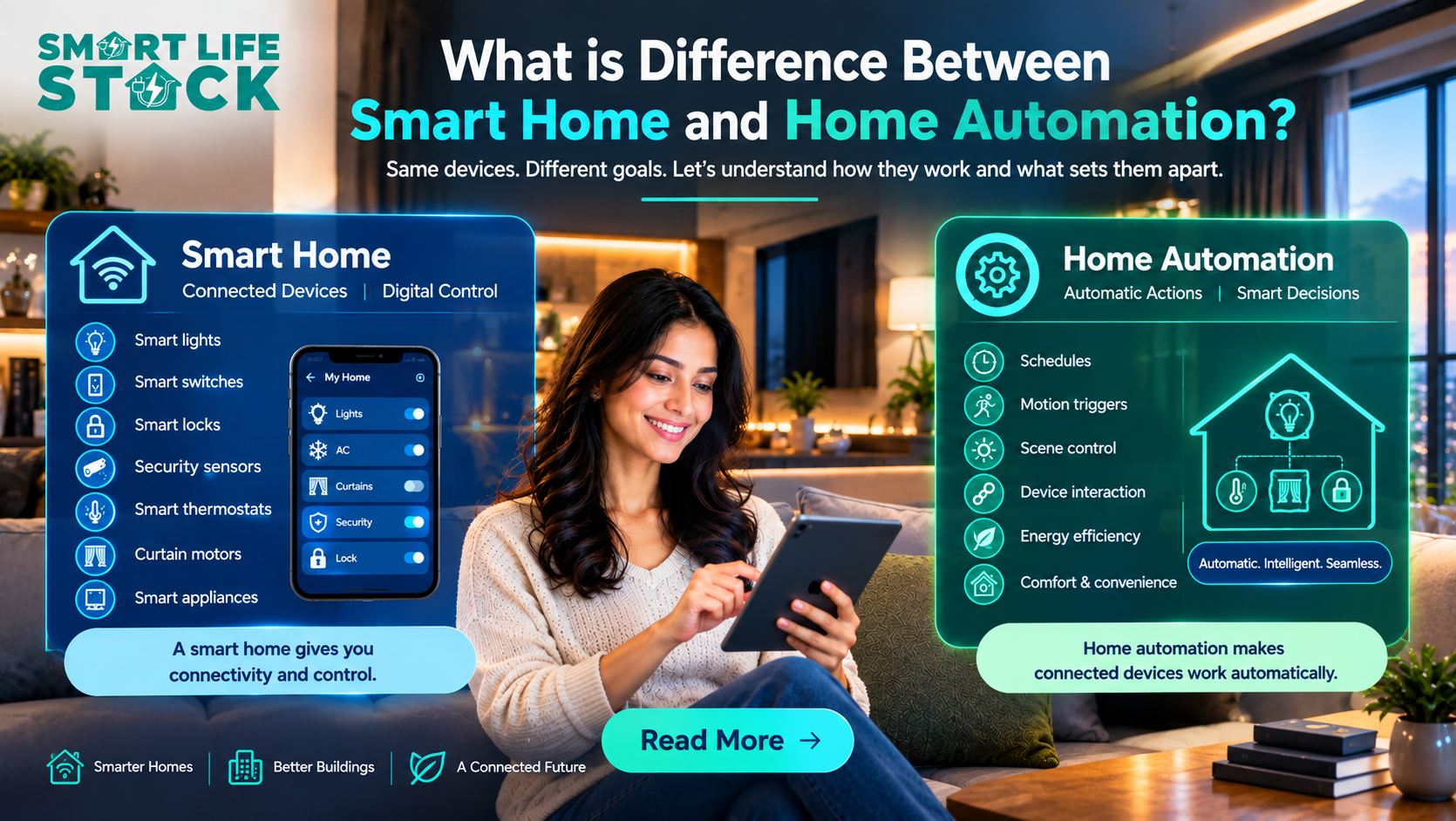
A smart home is a home in which connected devices, such as lights, switches, sensors, locks, fans, AC units, and appliances, can communicate with each other and be controlled automatically or remotely.
In a conventional home, you flip a physical switch.
In a smart home, you can:
- Turn lights on using a physical smart switch.
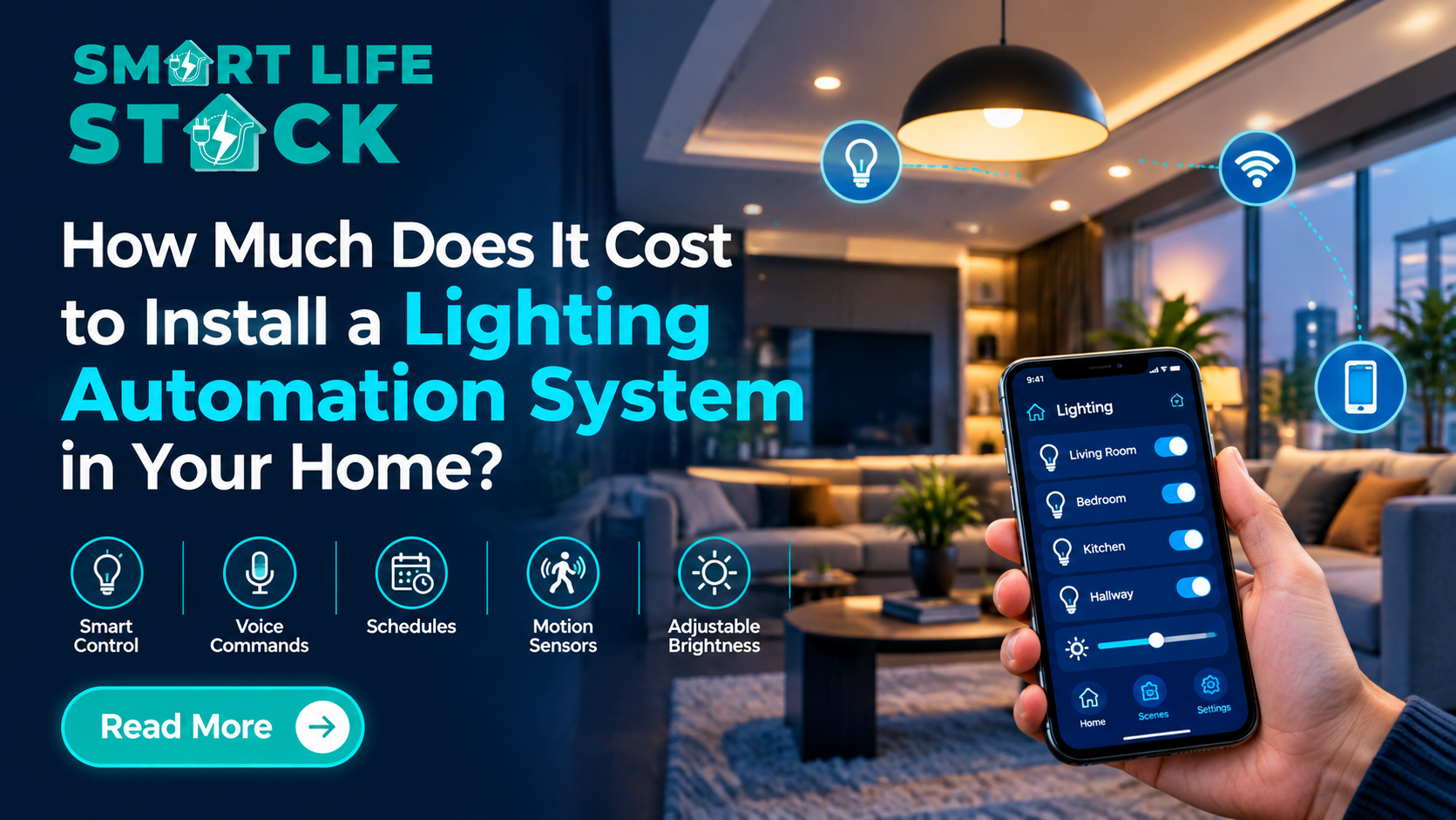
- Control lights with your phone.
- Say, “Alexa, turn on the living room lights.”
- Automatically turn on corridor lights when motion is detected.
- Dim bedroom lights at bedtime.
- Create “Movie,” “Dinner,” or “Away” scenes.
- Turn lights off automatically when everyone leaves.
- Continue using local automations even if the internet goes down, depending on the system and devices.
This is the practical difference between ordinary electrical control and smart home automation.
What is a smart switch?
A smart switch replaces or works alongside a conventional wall switch and connects the lighting circuit to a home automation system.
For many Indian homes, smart switches can be more practical than replacing every bulb with a smart bulb. Your existing ceiling lights, downlights, fans, and other fixtures can potentially remain in place while the switching layer becomes intelligent.
For new construction, the best results usually come from planning automation during the electrical and interior-design stage rather than trying to retrofit everything afterward.
Which Home Automation System Is Best for Lighting Control in 2026?
There is no single winner for every property, but the following hierarchy is useful:
System approach | Best for | Local/offline potential | Ease of use | Flexibility |
Home Assistant + Matter/Zigbee/Thread | Advanced whole-home automation | Excellent | Medium | Excellent |
Alexa + compatible smart switches/lights | Voice-first homes | Good, device-dependent | Excellent | Very good |
SmartThings | Multi-brand smart homes | Good, device-dependent | Very good | Very good |
Apple Home | Apple-focused households | Good | Excellent | Good |
Dedicated lighting ecosystems such as Philips Hue | Premium lighting | Excellent within ecosystem | Excellent | Good |
The important point is that the automation platform and the communication protocol are not the same thing.
For example, Matter is a smart-home application standard, while Thread is a networking technology. Zigbee is another wireless technology used by many smart-home products. Home Assistant can bring several of these technologies together.
1. Home Assistant: Best Overall for Advanced Lighting Automation
For homeowners who want maximum control, Home Assistant is arguably the strongest home automation system in 2026.
Its major advantage is that it isn’t tied to one manufacturer’s ecosystem.
You can build automations around Matter, Zigbee, Thread, Z-Wave, ESPHome, and other technologies, depending on the hardware and configuration. Home Assistant also supports local control for compatible devices.
Why Home Assistant is powerful
Imagine this automation:
If it is after sunset and someone enters the hallway and the house is occupied, turn the hallway lights to 40%. If it is after 11 PM, use only 10% brightness.
That is much more sophisticated than simply asking Alexa to turn on a light.
You can also connect lighting with the following:
- Motion sensors
- Door sensors
- Smart locks
- AC automation
- Automated fans
- Security systems
- Presence detection
- Energy monitoring
- Smart blinds
- Voice assistants
This makes Home Assistant particularly attractive for whole home automation control systems.
The biggest advantage: local operation
Home Assistant states that compatible local protocols such as Zigbee, Z-Wave, Matter, Thread, and ESPHome can continue working without an internet connection.
This makes it an excellent option for users looking for the following:
- Home automation without internet
- Smart home without internet
- Offline smart home
- Smart home automation without cloud reliance
- How do smart lights operate without an internet connection?
However, “offline” needs clarification. A device can work without the internet while still requiring your local Wi-Fi, Ethernet, Zigbee, or Thread network.
2. Alexa: Best for Simple Voice-Controlled Smart Homes
If your priority is simplicity, Alexa home automation is difficult to ignore.
An Alexa automated home can be straightforward:
“Alexa, turn on the bedroom lights.”
Or:
“Alexa, set the living room to 30%.”
Amazon supports multiple smart-home technologies, including Wi-Fi, Bluetooth Mesh, Zigbee, Matter, and Thread across its ecosystem. Some Echo and eero products also include built-in Zigbee smart-home hubs.
That means an Amazon Echo home automation setup doesn’t necessarily require a separate hub for every Zigbee device.
When Alexa makes sense
Choose Alexa when you want:
- Easy voice automation
- Simple smart-light routines
- Affordable smart home installation
- Easy control for elderly residents
- Phone and voice control
- Integration with compatible plugs, switches and lights
For example, a homeowner could create the following:
“Good Night” routine
- Turn off living room lights.
- Turn off bedroom lights.
- Lock compatible doors.
- Turn off selected smart plugs.
The exact functionality depends on the devices and integrations used.
Alexa isn’t necessarily the best automation brain
Alexa is excellent for accessibility and voice control, but advanced users may eventually want more sophisticated rules than a voice-first platform provides.
A hybrid setup can therefore be attractive: local automation through Home Assistant plus Alexa for voice control
3. SmartThings: A Strong Multi-Brand Option
Samsung SmartThings is another practical choice for households that want a mainstream ecosystem capable of bringing multiple smart devices together.
It can be particularly useful if your home already contains compatible Samsung products and other smart-home devices.
For homeowners who don’t want the technical complexity of Home Assistant but want more flexibility than a single lighting brand, SmartThings can be a good middle ground.
4. Philips Hue: Excellent for Premium Lighting
If your primary objective is lighting rather than whole-home automation, a dedicated lighting ecosystem such as Philips Hue deserves consideration.
The Hue Bridge uses Zigbee and can provide lighting automation, remote access, and integrations with Alexa, Apple Home, and other platforms. Philips says the Bridge supports whole-home control and advanced automation, while Bluetooth-only operation is more limited. Hue is especially appealing for
- Premium decorative lighting
- RGB/color lighting
- Scenes
- Entertainment lighting
- Bedrooms and living rooms
- Architectural lighting
The downside is cost: a whole-home installation can become significantly more expensive than smart switches.
Smart Switches vs Smart Bulbs: Which Is Better?
This is one of the most important decisions when planning a light automation system.
Smart bulbs
Smart bulbs make sense when you want the following:
- Color-changing lights
- Adjustable color temperature
- Individual fixture control
- Decorative lighting
- Dynamic scenes
But if someone switches off the physical power to a smart bulb, the bulb cannot communicate until power returns.
Smart switches
Smart switches are often better for:
- Ceiling lights
- Downlights
- Existing electrical circuits
- Family homes
- Rental properties
- Homes where conventional wall-switch behavior matters
A useful approach is to use smart switches for primary room lighting and smart bulbs for decorative or accent lighting.
That combination can deliver a much more practical smart home.
How to Control Smart Lights With a Phone8
A frequently asked question is, “How can you manage your lights using a smartphone?”
The basic process is:
- Install a compatible smart switch, bulb, or lighting hub.
- Connect it to the appropriate local network or hub.
- Add it to the manufacturer’s app or automation platform.
- Assign it to a room.
- Rename it clearly, for example, “Living Room Ceiling.”
- Create scenes and schedules.
- Control the light from the smartphone app.
This allows you to control lights with a smartphone whether you’re sitting on the sofa or, where remote access is supported, away from home.
For more advanced automation, the phone becomes only one control method. Motion sensors, schedules, presence detection, and voice commands can trigger the lighting automatically.
Can Smart Lights Work Without Internet?
Yes, some can.
This depends on the hardware and automation architecture.
For example, Home Assistant says compatible devices using local protocols can continue operating when the internet is down.
Zigbee is particularly relevant here because it creates its own local wireless network rather than requiring every light to communicate directly with an internet cloud.
Similarly, Philips Hue uses Zigbee between its Bridge and lights. Does Zigbee work without internet?
Yes. Zigbee itself does not require an internet connection.
However, your complete system may still depend on the internet for:
- Remote access
- Cloud-based voice services
- Firmware updates
- Vendor cloud integrations
Therefore, when evaluating an offline smart home, don’t ask only whether the device says “Zigbee” or “Matter.”
Ask:
Where does the automation logic run?
That is the more important question.
What Should You Look for in a Home Automation System?
Before choosing a home automation system, evaluate these factors.
1. Local control
Prioritize devices and platforms that can execute essential lighting automations locally.
2. Interoperability
Matter is increasingly important because it is designed as a cross-platform smart-home standard. Home Assistant supports Matter over local Wi-Fi and Thread.
- Physical control
Don’t eliminate traditional wall control unnecessarily.
Smart homes should still be easy for guests, children, and elderly residents to use.
4. Reliability
For important lights, switches, and sensors, reliability matters more than flashy features.
5. Scalability
Think beyond today’s lighting.
You may eventually add the following:
- AC automation
- Air conditioning automation
- Automated fans
- Smart entry automation
- Smart locks
- Security sensors
- Motorized curtains
- Energy monitoring
- Office sensors
6. Serviceability
A professional installation should be understandable and maintainable years later.
This matters particularly for real estate developers, interior designers, and premium residential projects.
Best Home Automation Architecture for Different Users
For a new homeowner
Choose smart switches + Matter/Zigbee devices + a flexible automation platform.
This gives you a strong foundation without forcing you to replace every light bulb.
For elderly residents
Prioritize:
- Physical switches
- Voice automation
- Simple scenes
- Motion-based lighting
- Night lighting
- Emergency-oriented routines
Voice control can reduce the need to walk across a dark room to operate a switch.
For rental property owners
Choose retrofit-friendly smart switches and simple automations that don’t require extensive structural changes.
For NRIs managing a Mumbai property
Remote monitoring and control become especially valuable.
A professionally designed system can help you monitor lighting, entry systems, AC, and other connected equipment remotely, subject to the system’s remote-access architecture.
For offices
A commercial office automation system should go beyond voice commands.
Smart office lighting can use:
- Occupancy sensors
- Daylight levels
- Time schedules
- Meeting-room status
- Energy monitoring
- Automated scenes
This is where best office automation using IoT becomes particularly useful: the system responds to what is actually happening in the space instead of simply following fixed schedules.
Smart Home Automation in India: What Makes Sense?
For Indian homes, retrofit considerations are important.
Before selecting a smart switch, verify:
- Electrical wiring requirements
- Neutral-wire requirements
- Load compatibility
- Fan regulator compatibility
- Switchboard dimensions
- Wi-Fi/Zigbee/Thread coverage
- Local installer support
- Warranty and replacement availability
For a new flat or villa, automation should ideally be discussed with the electrical contractor and interior designer before finalizing switchboards and false ceilings.
For existing properties, retrofit home automation systems can often add meaningful automation without rewiring the entire house.
A Practical 2026 Recommendation
If we were designing a new smart home today, the architecture would look something like this:
Physical layer:
Smart switches + selected smart bulbs + sensors
Connectivity:
Matter/Thread and/or Zigbee, depending on the device category
Automation layer:
Home Assistant or another suitable central platform
Voice layer:
Alexa, Google Assistant or Apple Home where desired
User interface:
Wall switches + smartphone + voice + automatic sensors
This approach avoids making the entire home dependent on one brand.
It also makes it easier to add devices gradually.
Is an Affordable Smart Home Possible?
Absolutely.
You don’t need to automate every room on day one.
A sensible phased approach is
Phase 1: Lighting
Automate the living room, bedroom, and entrance.
Phase 2: Comfort
Add fans, AC automation, and temperature sensors.
Phase 3: Security
Add smart entry automation, door sensors, and smart locks.
Phase 4: Whole-home automation
Connect scenes, presence detection, energy monitoring, and other devices.
This approach is often more cost-effective than buying an expensive whole home automation system immediately.
Key Takeaways
- Best overall for advanced users: Home Assistant with compatible local Matter, Zigbee, and/or Thread devices.
- Best for easy voice control: Alexa.
- Best for premium lighting: Philips Hue.
- Best strategy for many homes: Smart switches for everyday lighting plus smart bulbs for decorative lighting.
- Best for offline operation: Use local-capable devices and keep essential automation logic inside the home.
- Best for future-proofing: Favor interoperable standards such as Matter while checking the actual local-control capabilities of each product.
Conclusion
The best home automation system for lighting control in 2026 isn’t necessarily the one with the most gadgets. It is the system that gives you reliable control, easy everyday operation, useful automation, interoperability, and a sensible path for future expansion.
For advanced whole-home projects, a local-first architecture using Home Assistant with Matter, Zigbee, and/or Thread provides exceptional flexibility. For homeowners who want simple voice commands and quick setup, Alexa remains a strong choice. Dedicated lighting ecosystems such as Philips Hue are excellent when lighting quality and scenes are the primary priority.
For SmartLifeStack, the bigger opportunity is to design automation around the homeowner’s actual lifestyle, not simply install smart devices. A well-designed system should make lighting, comfort, security, and energy management feel natural while remaining simple enough for every member of the household to use.
Frequently Asked Questions
What is the best home automation system for lighting in 2026?
For maximum flexibility and local automation, Home Assistant combined with compatible Matter, Zigbee, or Thread devices is one of the strongest choices in 2026. For users who prioritize simple voice control, Alexa is easier to deploy.
How does Alexa control lights?
Alexa communicates with compatible smart lights, switches, or hubs through supported integrations and protocols. Some Echo devices also have built-in Zigbee smart-home hubs, allowing compatible Zigbee lights and switches to connect without a separate
How does Alexa turn on lights?
After a compatible light or switch has been added and assigned to a room, Alexa can operate it through voice commands, routines, and the Alexa app. For example, you can create a routine that turns on selected lights at a particular time or after a supported trigger.
Can smart lights work without internet?
Yes, some smart lights can work without internet, provided the device and automation platform support local communication. Home Assistant specifically supports local operation for compatible Zigbee, Z-Wave, Matter, Thread, and ESPHome devices.
Does Zigbee work without internet?
Yes. Zigbee is a local wireless communication technology and does not inherently require internet access. However, a particular manufacturer’s app, remote access feature, or cloud integration may still require internet connectivity.
What is smart home automation?
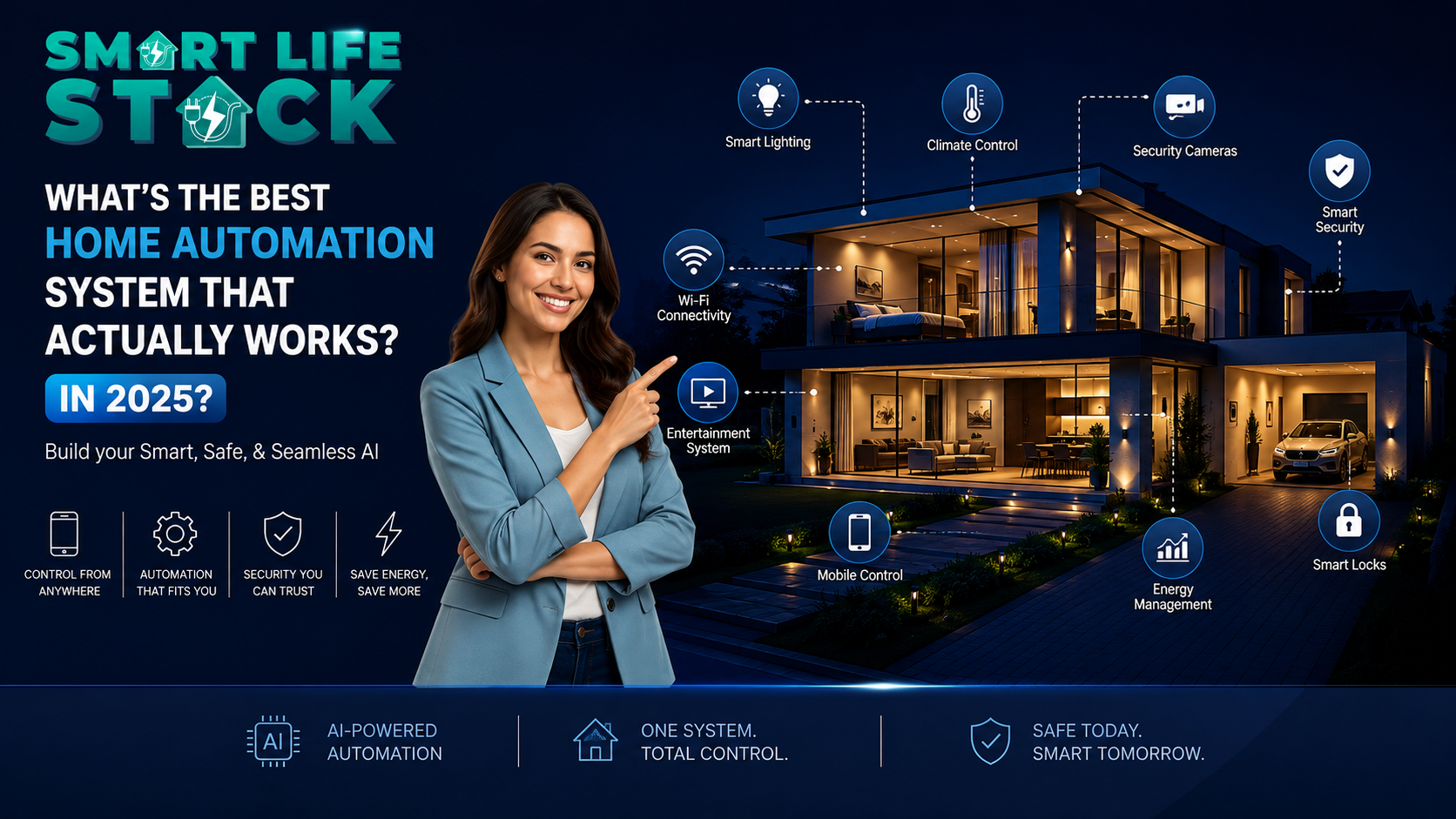
Smart home automation means using connected devices, sensors, software, and predefined rules to automatically control functions such as lighting, climate, security, entertainment, and appliances.
What is a smart switch?
A smart switch is an electronically connected wall switch that can be controlled manually and, depending on the model and ecosystem, through an app, voice assistant, schedule, sensor, or automation platform.
Is home automation worth it for a new flat?
Yes, particularly when planned before electrical and interior work is completed. Lighting, fans, AC, curtains, entry systems, and sensors can be designed into the project rather than added as disconnected gadgets later.