Finding the best home automation system for security comes down to picking setup architecture that stays online during sudden monsoon power cuts, penetrates dense reinforced concrete walls, and remains effortless for your entire family to operate.
For flat owners, bungalow buyers, and real estate investors across Mumbai’s western suburbs from Bandra and Khar up to Andheri, Goregaon, and Borivali securing a living space presents distinct urban hurdles. Modern high-rises use heavy Reinforced Cement Concrete (RCC) shear walls that act as digital dead zones for weak Wi-Fi signals.
Whether you are safeguarding aging parents who live independently, ensuring round-the-clock safety for young children, managing a rental asset, or overseeing property remotely as an NRI, this expert guide breaks down how to choose a reliable smart home ecosystem built for maximum protection.
What Makes a Smart Home System Truly Secure?
Slapping together isolated gadgets like a standalone Wi-Fi camera and a budget smart plug does not make an automated home system. A truly reliable smart home security system pairs unified hardware, local processing power, and low-latency fail When evaluating home automation systems for safety and defense, focus on these fundamental pillars:-safe networks.
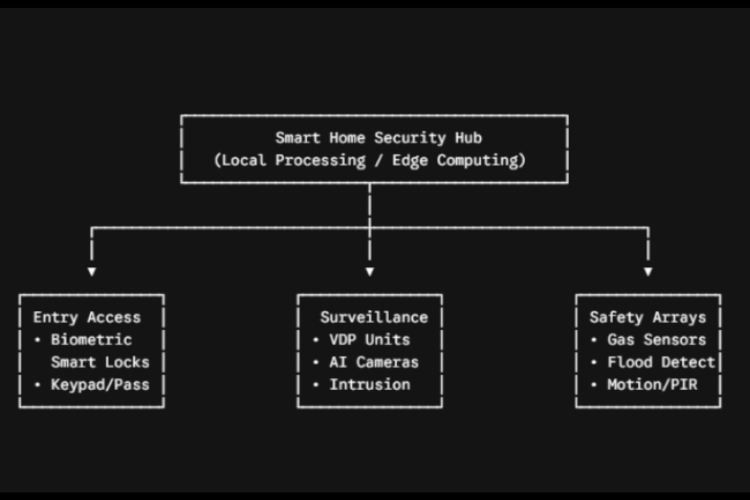
1. Offline Functionality & Local Edge Processing
Devices that rely entirely on the cloud may stop functioning properly if your internet connection is interrupted or the service experiences an outage. Look for hubs that support local protocol execution such as Zigbee 3.0 or Matter. Edge processing ensures that if a door contact sensor or perimeter motion detector trips at midnight, internal sirens, strobe lights, and safety triggers fire instantly, even without an active internet connection.
2. Physical Structural Penetration & Mesh Reliability
Sprawling apartments and duplexes built with heavy RCC structural columns block basic 2.4 GHz Wi-Fi frequencies. A secure setup uses a self-healing mesh topology (like what Zigbee technology is). Hardwired devices such as home automation switches or neutral-wire light modules act as repeater nodes, bouncing encrypted signals around concrete pillars to keep every corner connected.
3. Multi-Layer Access with Redundancy
A single point of entry control is a major risk factor. Modern smart door locks must offer multi-modal verification: high-precision 3D capacitive fingerprint recognition, anti-peep digital keypads, encrypted RFID cards, emergency physical mechanical keys, and app-based temporary access keys.
Essential Security Automation Modules for Suburban Homes
1. Smart Entry & Biometric Door Locks
Upgrading your primary entry point with high-grade smart door locks in Mumbai eliminates key management headaches while increasing access control.
- For Families & Seniors: Biometric scanning lets elderly family members enter with a single touch, ending the struggle with tiny physical keyholes or forgotten PINs.
- For NRIs and landlords: the system lets you create temporary OTP-based access codes for housekeepers, maintenance staff, or tenants directly from your smartphone.
2. AI-Powered Video Door Phones (VDP) & Smart Entry Automation
A smart video door phone acts as an intelligent digital gatekeeper.
- Streams high-definition video feeds straight to wall-mounted touch panels or smartphones.
- Features two-way audio talkback to verify courier packages or visitors without opening the main door.
- AI-powered human detection monitors corridors for unusual activity and instantly sends real-time alerts to your smartphone before a potential intrusion occurs.
3. Comprehensive Environmental Safety Arrays
A reliable home automation system enhances safety by detecting environmental hazards as effectively as it protects against unauthorized entry.
- Gas Leak Detectors: Detect PNG/LPG leaks in the kitchen immediately, sounding a local alarm, shutting down automated gas valves, and triggering exhaust fans.
- Water Leak Sensors: Placed in washrooms, utility spaces, or under dishwashers to detect plumbing breaches before water damages expensive hardwood flooring.
- Window and door sensors: continuously monitor balcony doors, security grills, and utility windows, instantly alerting you to any unauthorized access attempts.
4. Smart Lighting Automation for Presence Simulation
Home lighting automation deters intruders when your residence is empty.
- Activate automated “Vacation Modes” that turn indoor smart lighting on and off in natural, randomized patterns to make an empty flat look occupied.
- Sync hallway lighting with occupancy sensors to guide elderly family members safely during late-night bathroom trips without blinding glare.
Wireless Communication Protocols Compared: Wi-Fi vs. Zigbee vs. Z-Wave
Selecting the ideal protocol ensures that your IoT home automation sensors don’t lag or disconnect.
Feature | Standard Wi-Fi Automation | Zigbee 3.0 Protocol | Z-Wave Protocol |
Cloud Dependency | High (Relies heavily on server pings) | Ultra-Low (Executes locally via hub) | Ultra-Low (Executes locally via hub) |
Power Consumption | High (Requires frequent battery replacement) | Minimal (Batteries last 1.5 to 3 years) | Minimal (Batteries last 2+ years) |
RCC Wall Penetration | Struggles through dense concrete walls | High Efficiency (Self-healing mesh) | High Efficiency (Sub-GHz mesh) |
Latency / Response Time | Variable (500ms – 3000ms via cloud) | Ultra-Fast (<100ms local execution) | Ultra-Fast (<100ms local execution) |
Best Used For | Basic single-device apps, smart plugs | Complete local security networks | Specialized high-end custom builds |
Expert Takeaway: For critical safety and security tasks, avoid building a system using only Wi-Fi devices. Anchoring your system on a dedicated Zigbee hub keeps your entire alarm and sensor mesh functional during network outages.
Tailored Automation Strategies for Real-World Profiles
Profile A: Multi-Generational Families with Senior Citizens & Kids
- The Goal: Simple, foolproof home protection that doesn’t require tricky phone apps.
- The Setup: Install biometric smart entry locks paired with soft motion-activated hallway nightlights and physical SOS panic buttons in bedrooms and washrooms.
- The Result: If an elderly family member slips or feels unwell, pressing an SOS button immediately triggers loud indoor sirens while sending emergency push alerts to family phones.
Profile B: NRIs & Remote Property Investors
- The Goal: 24/7 remote monitoring and asset protection from anywhere in the world.
- The Setup: Combine a dual-connection smart entry system (Wi-Fi + 4G backup) with water leak sensors and smart indoor security cameras.
- The Result: Monitor your property in real time, issue temporary access codes to maintenance teams, and get instant alerts if water leaks occur.
Profile C: Rental Properties & Apartment Retrofits
- The Goal: Modern security integration without breaking tiles, altering wiring, or losing tenancy deposits.
- The Setup: Choose modular, wireless smart home retrofit switches that fit behind existing switch plates alongside battery-powered surface sensors.
- The Result: Enjoy complete smart control during lease periods and easily return the flat to its original state later.
Why Choose SmartLifeStack for Home Security Automation?
Designing an automated security system means choosing hardware that works together smoothly without crashing. SmartLifeStack builds tailored home automation solutions designed specifically for Indian residential spaces.
The SmartLifeStack Difference
- Local-First Architecture: We build security setups centered around reliable offline hubs, keeping your alarms active during internet downtime.
- Zero-Destruction Retrofitting: Upgrade your home without damaging existing plaster, tiles, or wall finishes using modular switch inserts.
- End-to-End Local Support: From choosing hardware to professional installation and ongoing maintenance, our Mumbai team provides complete long-term care.
Frequently Asked Questionse
What happens to my smart home security system during a power outage?
Systems designed with local battery backups continue running during blackouts. Zigbee sensors, battery-operated smart locks, and siren modules stay active. Connecting your central hub to a small UPS keeps remote app alerts active over mobile networks.
Can wireless smart home security devices be hacked easily?
Basic Wi-Fi gadgets using default login passwords carry risk. Systems built on Zigbee 3.0 protocols use AES-128-bit encryption to block unauthorized access. Using multi-factor authentication (MFA) and setting up your smart devices on a dedicated router network keeps your home system safe.
Can I install a smart security system in an old flat without changing the wiring?
Yes. Wireless retrofit switch modules fit behind existing wall switch plates, while wireless sensors mount cleanly without drilling or fresh wiring.
How do smart door locks perform in humid, coastal conditions?
High-grade smart door locks built for coastal regions like Mumbai use IP65-rated weather protection and anti-corrosive coatings to protect internal electronics against moisture, salt air, and heavy monsoons.
What is the main difference between home automation and a traditional alarm system?
Traditional alarm systems react passively, sounding a bell only after an intrusion happens. A smart home security system works proactively by tying together lighting, access control, and environmental sensors. For instance, if a sensor detects motion on a balcony late at night, the system can instantly flood the area with light, lock interior doors, sound an alarm, and push a video link to your phone.
Final Thoughts
The best home automation system for security combines fast offline execution, clear access controls, and simple everyday usability. Prioritizing reliable local protocols like Zigbee over pure cloud connections keeps your home protected when you need it most.
Whether you want to safeguard your family flat, protect a rental unit, or manage property remotely from abroad, SmartLifeStack delivers modular, reliable smart home security designed for modern living.